

Franchise marketing: strategy, budgets and technology
 What is Franchise Marketing?
Franchise marketing is how franchise brands coordinate marketing across a network of independently owned locations. Corporate sets the brand standards and campaign frameworks; franchisees execute locally, adapting those campaigns to their own market. The whole discipline is the tension between those two jobs: staying recognisably one brand while letting hundreds of owners market to their own communities.
Why franchise marketing matters more than ever
The franchise marketing landscape has fundamentally changed. Digital channels now drive more than half of franchise leads, customers expect local relevance while recognizing national brands, and AI is transforming how marketing gets executed across multiple locations.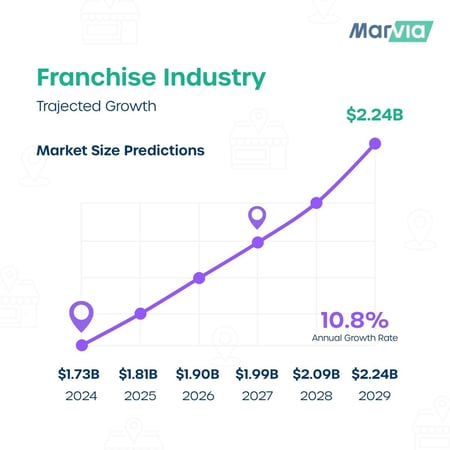
The franchise industry is booming. The global franchise market is set to reach $2.24 billion by 2029, growing at over 10% each year. In the U.S., franchises are expected to outpace the wider economy in 2025, with nearly 60% of franchisors planning bigger marketing investments.
Meanwhile, franchise marketing teams face mounting pressure:
- 83% report being overwhelmed by localization requests from franchisees
- Brand consistency scores are dropping as locations create their own materials
- Marketing budgets are increasing, but ROI tracking across locations remains challenging
- Customer expectations for personalized, local experiences continue rising
The solution isn't doing more marketing, it's doing franchise marketing smarter. Modern franchise brands are using distributed marketing approaches that reduce corporate workload while improving local market results.
1. The basics
Let’s cover the essentials. Before you build effective strategies for your franchise network, it’s important to understand how franchises work and what sets their marketing apart.
What is a franchise?
A franchise is a business model where a franchisor licenses its business model, brand, and products to franchisees who pay fees to operate under the established brand. There are over 800.000 franchise establishments in the U.S., ranging from single-location operations to massive chains.
Franchises come in two main types:
- Franchise-only models where all locations are independently owned
- Mixed models combining franchise and company-owned locations

Two types of franchise marketing
Franchise marketing actually includes two distinct flows, each serving different purposes:
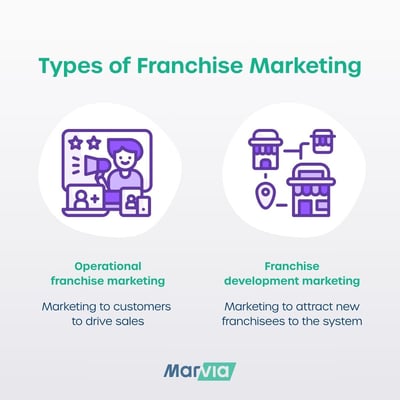
1. Operational franchise marketing
This approach reaches your end customers in much the same way as traditional business marketing, with one key difference: franchisees enjoy the strength of a coordinated marketing strategy led by the head office. Each location gains access to professional campaigns, strong brand awareness, and marketing resources that would be out of reach on their own. At the same time, franchisees have the flexibility to adapt these campaigns to fit their local market and community needs.
2. Franchisee development marketing
This targets potential franchisees and combines elements of employee recruitment, HR, and traditional marketing to attract new business owners to the system. The goal is clear: connect with talented entrepreneurs who are ready to invest and thrive within the franchise system. It’s about highlighting the opportunity, showing real growth potential, and building confidence in the brand and support structure that helps every location succeed.
What makes franchise marketing different?
Unlike single-location businesses or companies with corporate-owned operations, franchise marketing must coordinate one brand message across dozens or hundreds of independently owned franchise units. Each franchisee operates in different markets with unique customers, competitors, and community needs, but they're also independent business owners with their own goals and decision-making authority.
The core challenge: How do you maintain a consistent brand identity while allowing each franchisee to connect with their local market, when you don't directly control the people executing the marketing?
Why this challenge matters
When franchise marketing isn’t aligned, things unravel fast. Locations start producing materials that don’t reflect your brand, customers are met with mixed messages, and precious marketing resources get lost to duplicated efforts. Consistent branding isn’t just about looking good, it’s a proven driver of growth. Research shows that franchises with a unified brand presence can boost revenue by up to 33%. That’s why brand coordination isn’t optional; it’s the foundation for lasting franchise success.
How successful franchises handle it
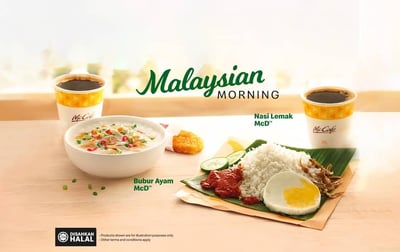
Take McDonald's as a perfect example. Every location worldwide uses the same golden arches, red and yellow colors, and core messaging about quality and convenience. But walk into a McDonald's in India and you'll find the Maharaja Mac instead of a Big Mac, plus local architectural touches that fit the community. They've mastered the balance: unmistakable brand consistency with smart local adaptation.
Key takeaway
Franchise marketing thrives on strong coordination. Success depends on having systems in place that protect your brand identity while giving franchisees the power to truly connect with their local audiences. That’s why having a clear, purposeful strategy is essential.
Next chapter preview: learn how to build a franchise marketing strategy that solves these coordination challenges while maximizing both brand consistency and local market success.
2. Strategy
Creating a franchise marketing strategy isn't just scaling up a single business approach. You're coordinating one brand message across dozens or hundreds of independent business owners, each operating in different markets with unique challenges and opportunities.
The 5 essential components of franchise marketing strategy
1. Make clear agreements
Before any marketing happens, you need crystal clear agreements about who does what, when, and how.
What needs to be defined:
- Decision-making authority - Who can approve marketing spend, campaigns, and local adaptations (with specific dollar limits)
- Brand control boundaries - What must stay consistent (logos, core messaging) vs. what can be localized (offers, community events)
- Resource allocation - Who provides marketing materials, budgets, training, and technical support
- Communication protocols - How corporate and franchisees coordinate on campaigns, approvals, and crisis situations
- Performance accountability - Who's responsible for measuring and improving marketing results at each level
Why this matters:
Without clear agreements, franchisees either overreach brand guidelines or under-market their locations. Both scenarios hurt overall performance and create frustration between corporate teams and franchisees.
2. Establish a strong marketing strategy foundation
 Your franchise marketing strategy must address unique operational realities that single-location businesses and corporate-owned multi-location chains never face.
Key strategic elements:
- Target audience definition for both national and local markets
- Channel selection that works across diverse geographic markets
- Message consistency frameworks with local customization guidelines
- Budget allocation between corporate and local marketing efforts
- Performance measurement that tracks both brand and location-level success
Common mistake:
Treating franchise marketing like traditional business marketing ignores the complexity of coordinating multiple semi-autonomous locations with different market conditions.
3. Balance national and local marketing efforts
Here's where most franchise marketing strategies fall apart. You need campaigns that feel both nationally consistent and locally relevant, but there's no one-size-fits-all formula.
The challenge:
52% of franchise leads now come from digital advertising, but local relevance drives conversion. You can't just push national campaigns and hope they work everywhere.
 National marketing handles:
- Brand awareness that builds recognition across all markets
- Major product launches requiring coordinated messaging and timing
- Industry positioning and thought leadership content
- Digital advertising campaigns that benefit from scale and consistency
Local marketing handles:
- Community event participation and neighborhood sponsorships
- Local SEO optimization for "near me" and location-specific searches
- Market-specific promotions that address local competition and pricing
- Cultural considerations and regional customer preferences
Finding your balance
The right mix depends on your industry, market maturity, and franchisee capabilities. Fast-food franchises might lean heavily national (80/20), while service-based franchises might need more local focus (60/40). Test different approaches and measure what works for your specific network.
4. Create systematic collaboration between head office and franchisees

This isn't just about sending down orders from corporate. Real franchise marketing success comes from two-way collaboration that combines corporate expertise with local market insights.
Why collaboration matters
Franchisees understand their local customers, competition, and community dynamics better than corporate teams ever could. Meanwhile, corporate teams offer marketing expertise, broader market data, and resources that individual locations can't afford.
Effective collaboration includes:
- Regular feedback sessions between corporate and franchisees
- Shared performance data and market insights
- Joint campaign planning for major initiatives
- Local market research sharing and discussion
- Best practice documentation and distribution across the network
5. Implement systematic best practice sharing
 Most franchises waste enormous amounts of effort because they reinvent marketing tactics at each location instead of scaling successful approaches across the network.
The problem: A franchisee in Denver creates a brilliant local campaign that drives 40% more foot traffic. Meanwhile, a franchisee in Tampa struggles with the same challenge but never learns about the Denver solution. This happens thousands of times across franchise networks.
Solution framework:
- Monthly best practice calls where high-performing locations share specific tactics and results
- Campaign performance databases that track what works across different market types and sizes
- Local success story documentation with replicable elements clearly identified
- Peer mentoring programs between experienced and new franchisees
Overcoming common franchise marketing strategy challenges
Challenge 1: overwhelming localization requests

The issue
Central marketing teams receive endless requests for customized materials, creating bottlenecks and inconsistent brand execution. Some franchise marketing teams report being overwhelmed by thousands of individual requests monthly.
Solution
Implement systems that enable franchisees to create approved local marketing materials without constant corporate oversight. Modern distributed marketing platforms can reduce localization requests by up to 83% while maintaining brand consistency.
Challenge 2: inconsistent execution and limited expertise.jpg?width=350&height=350&name=brand%20consistency%20issues%20(1).jpg)
The issue
Franchisees have different skill levels and marketing experience, leading to inconsistent brand execution. Many are excellent at running their core business but struggle to create effective local marketing campaigns.
Solution
Provide templated marketing materials with built-in brand guidelines plus standardized training programs. The best systems give franchisees professional design tools with guardrails, intuitive enough to create professional materials in minutes, not hours.
Challenge 3: misaligned goals and priorities
 The issue
Corporate teams focus on brand consistency and national campaigns, while franchisees prioritize immediate local sales and ROI. This creates tension when corporate launches campaigns that don't address local market needs or when franchisees want to deviate from brand standards for local opportunities.
Solution
Establish shared performance metrics that balance brand consistency with local business results. Create regular alignment sessions where corporate and franchisees review both brand goals and local market performance, ensuring campaigns serve both purposes.
Other common challenges include:
- Budget allocation conflicts over who pays for marketing activities and how much franchisees contribute to national campaigns
- Timing and coordination problems when national campaigns don't align with local market readiness or seasonal needs
Key takeaway
Successful franchise marketing strategy requires systematic coordination between national brand building and local market activation. The most effective approaches use technology to automate routine tasks while preserving human creativity for strategy development and relationship building.
Next chapter preview: Learn how to launch franchise marketing campaigns that execute your strategy effectively across all locations while maintaining brand consistency and local relevance.
5. Measuring franchise marketing success
Allocating your marketing budget is just the beginning; true franchise marketing success comes from understanding what drives results. When countless local campaigns are running at once, it’s essential to have clear, actionable insights at every level. Leading franchise brands harness data-driven tools to bring visibility, accountability, and ongoing improvement to every location’s marketing efforts.

Why measurement matters
Measurement is more than just reporting numbers. It’s how you:
- Build trust between corporate and franchisees
- Identify which campaigns truly drive revenue
- Justify marketing investments for next year’s budgets
- Discover best practices that can be replicated systemwide
When everyone sees clear results, marketing shifts from being a cost center to being viewed as a proven growth driver.
Two levels of measurement: brand and local
Franchise marketing performance happens on two levels: the brand level and the local level, and both are equally important.
1. Brand-level measurement
Focuses on the health and visibility of the brand across the entire network.
Key KPIs include:
- Brand awareness and reach
- Campaign participation rates
- Lead volume generated by national campaigns
- Brand consistency and compliance scores
- Cost per acquisition (CPA) across the network
These metrics show whether your national campaigns are delivering brand equity and long-term growth.
2. Local-level measurement
Zooms in on what happens at individual franchise locations.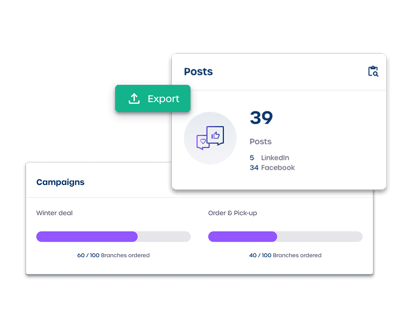
Key KPIs include:
- Local leads, foot traffic, and conversions
- Local ad performance (click-through rates, engagement)
- Participation in HQ campaigns
- Return on local marketing investment (ROMI)
- Local social engagement or community impact
Together, these insights empower both headquarters and franchisees to see exactly where marketing is succeeding and uncover the reasons behind the strongest results.
How to measure franchise marketing effectively
- Create a shared measurement framework
Set clear KPIs that apply network-wide and make sure every franchisee knows how those metrics are defined. Consistent measurement creates a level playing field and ensures every location is accountable for its results. - Use the right tools
Modern distributed marketing platforms and analytics dashboards (like GA4 with server-side tracking) give you a unified view of brand and local performance. These tools bring together data from every campaign, national and local, so you can track results across your entire network in one place. - Establish transparent reporting
Share performance insights across HQ and every location. When franchisees can clearly see what campaigns deliver, transparency builds trust, drives participation, and turns reporting into a shared growth conversation instead of a one-way update. - Normalize the data
A campaign running in New York should not be held to the same benchmarks as one in a smaller market. Adjust for local variables such as market size, media costs, and seasonality so you can compare performance fairly and see which locations genuinely excel. - Link results back to spend
Tie every euro or dollar in your budget directly to the results it produces. When HQ funds creative and media and franchisees invest in local amplification, track ROI for each layer so you can see which parts of the funnel drive the most value. - Share insights across the network
Highlight standout campaigns and locations in a regular cadence, not just once a year. Turn raw numbers into concrete stories that show which strategies and creatives drove traffic, revenue, and brand lift so every franchisee can see what to replicate.
Key takeaway
Franchise marketing only works when you track both brand and local metrics. Brand data shows if national spend builds equity, local data shows if it turns into store revenue. Focus on one, and you risk either empty awareness or short-term sales that weaken the brand.
Next chapter preview: See which marketing tools franchise networks actually need, from digital asset management to local campaign distribution, and how to judge whether a platform will grow with your network or quietly turn into the next bottleneck.
6. Technology
Most marketing tools are built on an assumption that doesn't hold in a franchise network: that one team produces the marketing and publishes it. Your setup looks nothing like that. You have dozens or hundreds of publishers who don't report to you, weren't hired for their marketing skills, and are running a business that demands their attention long before a Facebook post does.
That single difference drives every technology decision that follows. The question isn't which tools have the best features. It's which tools produce good marketing when the person using them isn't a marketer and has fifteen minutes.
Do you need a marketing platform yet?
Not every franchise network does. Plenty run perfectly well on a shared drive, a designer on retainer, and a group chat, and adding software before you've hit the limits of that setup just adds a login nobody uses.
The signal isn't how many locations you have. It's what your central team's week actually looks like.
You've outgrown your current setup when:
- Localization requests have become the job. Adjusting a flyer for a new address, resizing an asset, fielding a one-off before Friday. When this consumes more of the team's week than strategy does, you have a production problem that hiring won't fix.
- Most of your locations aren't marketing at all. If only a fraction of your network is actively running local campaigns, the barrier is almost never willingness. It's that the process is too slow to be worth starting.
- You can't answer basic questions about the network. Which locations ran the last campaign. Which assets are actually being used. Which version of the logo is live in the field. If these take a week to find out, you're managing blind.
- Brand consistency depends on people remembering the rules. Guidelines in a PDF are a policy. Guardrails inside a template are a system. Policies degrade as you grow.
If none of these describe you, spend the budget elsewhere and revisit when one does. If two or more do, the cost of waiting is already higher than the cost of the platform.
The four capability layers
Franchise marketing technology covers four jobs. Most networks end up doing all four eventually, the question is whether they're handled by one system or four that don't talk to each other.
1. Asset management
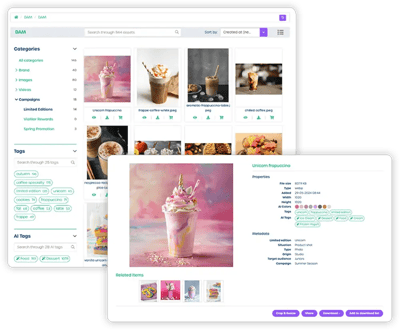 One place where the current version of everything lives, with the old version gone rather than buried. This sounds trivial until you count how many logos are in circulation across your network right now.
What matters here isn't storage, it's access control and versioning. Franchisees should see what applies to them and nothing else, and shouldn't be able to reach an asset that expired last quarter. Search matters more than it appears to: if a franchisee can't find something in under a minute, they will use whatever they already have on their desktop.
2. Content creation
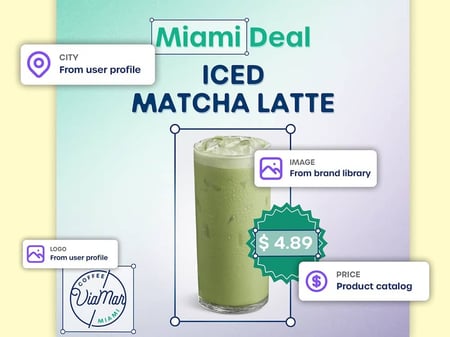 The layer that determines whether local marketing actually happens. Franchisees need to produce a poster, a social post, or a leaflet without a designer and without corporate approval on each one.
That only works if the brand rules are built into the template rather than written next to it. Lock what can't move — logo placement, typography, colour, legal lines. Open what should move — the offer, the address, the local image, the opening hours. Done properly, the output is on-brand by construction, and nobody has to review it.
This is also where address, pricing, and location data should be pre-loaded per franchisee, so the local details fill themselves in rather than being typed in wrong.
3. Distribution
Getting the finished thing to where it needs to go, across every channel your network uses — social pages, local ads, print, in-store, direct mail.
The requirement most networks underestimate is offline. Print, signage, and mailings are still a meaningful share of local marketing spend, and if your platform stops at digital, franchisees go back to email for everything else. Supplier and print-partner integrations are what keep the process in one place.
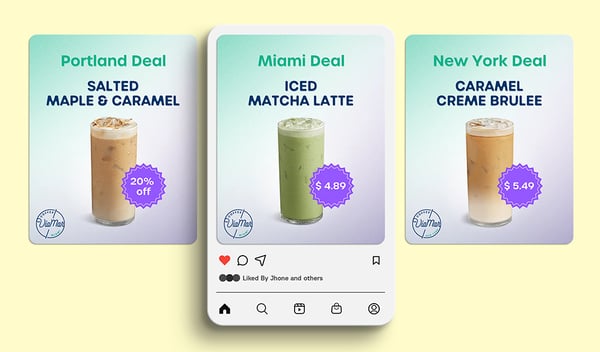
The second requirement is one-to-many: publishing a single campaign across hundreds of local pages, each with its own local variation, without coordinating hundreds of people.
4. Measurement
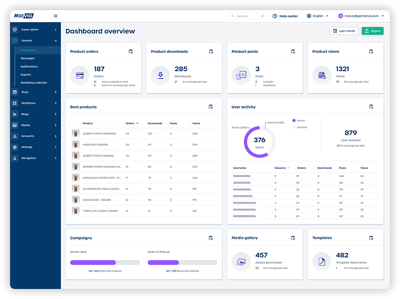
Covered in chapter 5, but worth naming as a technology requirement rather than a reporting exercise. Your system needs to show participation as well as performance: which locations ran the campaign, not only how the campaign did.
Participation data is what turns measurement into action. Performance tells you a campaign worked; participation tells you which forty locations didn't run it and can be prompted to.
A note on integrations
These four layers only compound if they connect to the systems already running your business: POS, CRM, print suppliers, social platforms. A stack where each layer is excellent in isolation but exports to spreadsheets gives you four tools and no network view.
Where Marvia fits
Marvia is a franchise marketing platform built for exactly this problem, covering all four layers in one place.
Digital Asset Management for one findable, permission-controlled source of truth. Dynamic Templates with brand elements locked and local elements open — built in the platform or uploaded from InDesign. Marvia DNA, which auto-populates each location's address, pricing, imagery and promotions from a profile set up once, so franchisees never type their own details in. Social Campaigns and Local Distribution to push one campaign across hundreds of local channels, online and offline. Marvia Analytics for participation and performance across the network.
One login for the franchisee. One view for HQ.
Brands including Domino's, Burger King, Boston Pizza, ZEISS, KidStrong and Nurse Next Door use it.
Domino's: coordinating a network across countries and channels
Domino's had the problem chapter 4 describes. Franchisees were reluctant to take part in marketing at all, because producing and distributing materials took time away from running the store. And with every franchisee managing their own local budget, keeping cost allocation consistent across the network was genuinely complex. On top of that, campaigns had to run across direct mail, door-to-door, and a growing list of digital channels at once.
What they built was a portal per country, each with layouts adapted to that market rather than one global template forced everywhere. Franchisees choose their level of participation and their channels, and see what campaigns cost them before they commit.
It started as a pilot in 15 stores. It now runs in more than 2,500 locations.
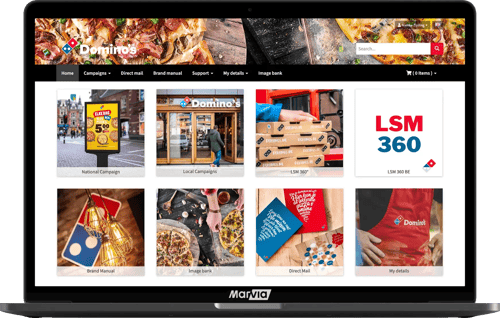
That growth curve is the point. Adoption in a franchise network isn't won at rollout — it's won when franchisees decide the thing is worth opening again.
Read the full Domino's story →
Jeremiah's Italian Ice: when you've outgrown your setup
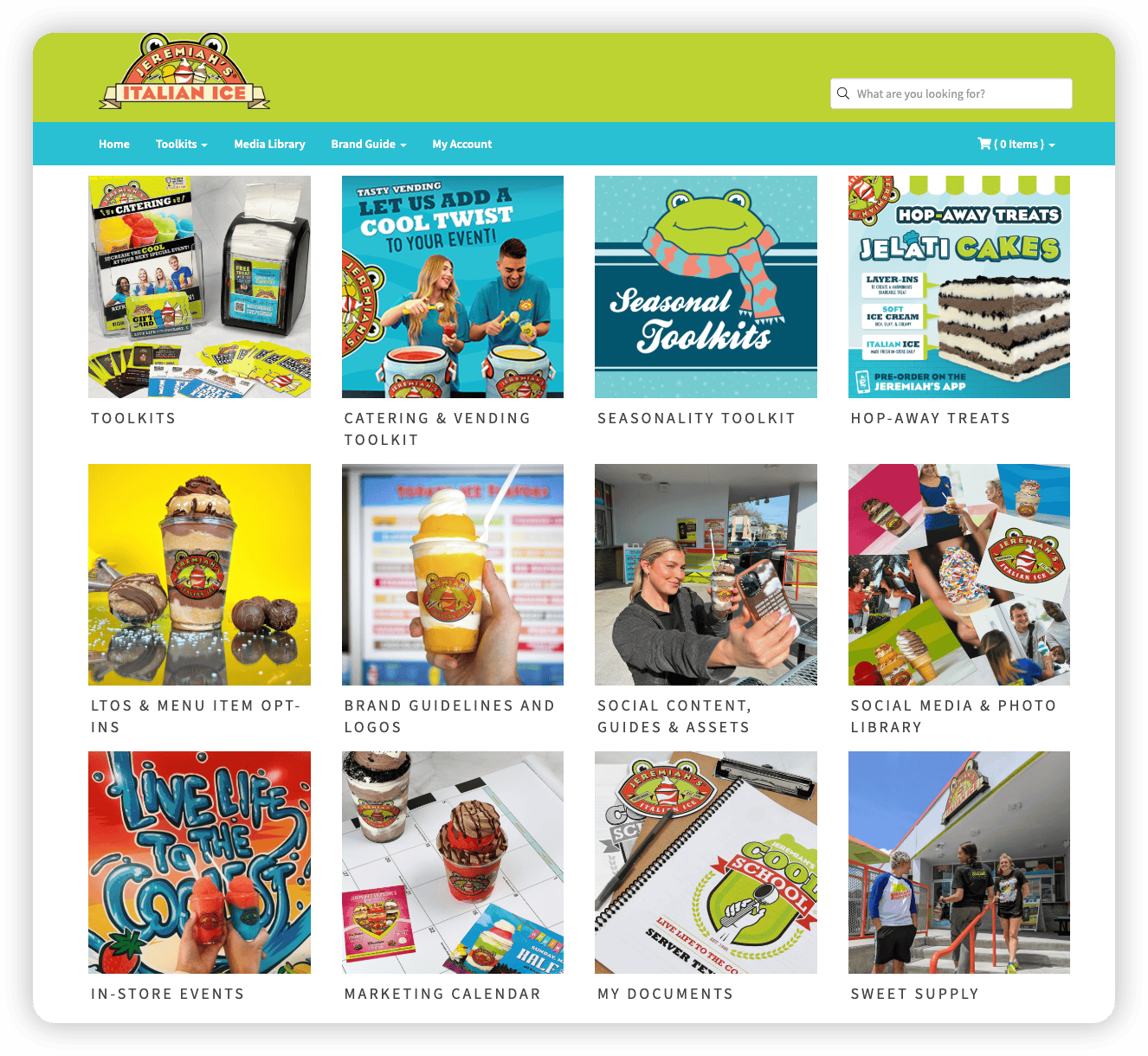
Jeremiah's Italian Ice is a clean example of the symptoms in chapter 6. One designer on the central team, buried in requests, with a three-week turnaround on marketing materials.
Franchisees who'd stopped waiting and started making their own. And a previous platform, Marq, that had no integrated asset management and couldn't handle local customization.
Marketing Manager Maggie Sumner put the decision plainly: they'd hit a wall with what they had.
Replacing it with one platform covering both templates and asset management removed the three-week queue — franchisees get what they need immediately, and the central team is back on strategy rather than versioning. The network now averages 40+ downloads a day.
The three-week queue was never a design problem. It was one designer and no system, and that's the most common version of this failure.
Read the full Jeremiah's story →

In their words
Shorter takes from marketing teams running local marketing across their networks.
