
Last updated: August 7, 2026
Key Takeaways
 If you're a marketing manager at a multi-location brand, you know the feeling all too well. Your inbox is overflowing with requests from local teams: "Can you create a flyer for our upcoming event?" "We need new social graphics by Friday." "Could you customize this brochure for our location?" What started as a few occasional requests has snowballed into a full-time job, pulling you away from strategic initiatives and draining your team's resources.
You're not alone in this struggle. Marketing teams managing franchises, retail chains, dealerships, and other distributed networks face this challenge daily. The good news? There are proven strategies to dramatically reduce these requests while actually empowering your local teams to be more effective. Let's explore how you can reclaim your time and transform this reactive cycle into a scalable system.
Understanding why request volume spirals out of control
Before we dive into solutions, it's worth understanding why this problem exists in the first place. Most central marketing teams start with good intentions; they want to ensure brand consistency and provide support to local teams. But without the right systems in place, every customization request becomes a bottleneck.
Local teams typically need marketing materials for legitimate reasons: They’re responding to local market opportunities, promoting location-specific events, or addressing unique customer needs. When they have to wait days or weeks for the central team to fulfill these requests, they either opt out of marketing altogether or, worse, create their own off-brand materials. Neither outcome serves your brand well.
The traditional request-and-wait model simply doesn't scale. When you have dozens or hundreds of locations all needing customized materials, your central team becomes overwhelmed, local teams become frustrated, and marketing opportunities slip through the cracks.
Create a self-service brand portal
The most effective strategy for reducing request volume is creating a centralized, self-service portal where local teams can access and customize marketing materials on their own. Think of it as shifting from a "made-to-order" model to a "grab-and-go" approach, but with guardrails in place to maintain brand consistency.
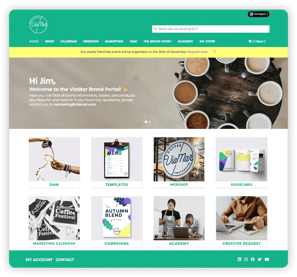 A well-designed self-service portal serves as your always-available marketing hub. Local teams can log in 24/7 to find approved templates, brand assets, and ready-to-use materials. Instead of emailing the central team and waiting for a response, they can download what they need immediately or customize templates within pre-approved parameters.
The beauty of this approach is that it doesn't require your local teams to have design expertise. They can personalize flyers, social media posts, emails, and other materials by simply filling in fields like their location name, address, promotion details, or local imagery, all while the template ensures fonts, colors, logos, and layouts remain on-brand.
Brands that implement self-service portals can reduce localization requests significantly. That's not a marginal improvement, it's transformative. Imagine getting back nearly a full day each week (or more) that you currently spend handling routine customization requests.
Develop template libraries for common use cases
The foundation of any successful self-service system is a comprehensive library of customizable templates. Rather than creating one-off materials for individual requests, invest time upfront in building templates for recurring needs.
Start by analyzing the most common requests you receive. You'll likely notice patterns: seasonal promotions, event announcements, social media graphics, email newsletters, local service offerings, and recruitment materials probably account for the majority of your workload. Create professional, on-brand templates for each of these categories.
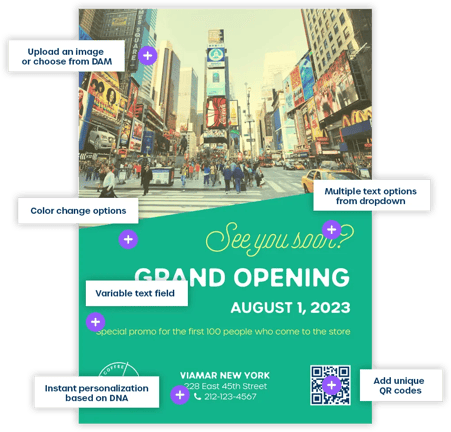 The key is building flexibility into your templates without sacrificing brand control. Modern distributed marketing platforms allow you to lock certain elements (like logos, brand colors, and core messaging) while making other elements customizable (like location details, images, dates, and promotional offers). This gives local teams the personalization they need while ensuring brand consistency.
Think beyond just print materials, too. Your template library should span multiple channels: social media posts, email campaigns, digital ads, in-store signage, and more. The more comprehensive your library, the fewer custom requests you'll receive.
Establish clear brand guidelines and training
Even with a self-service portal and template libraries, you'll still receive unnecessary requests if local teams don't understand what's available to them or how to use it. That's why education is a critical component of reducing request volume.
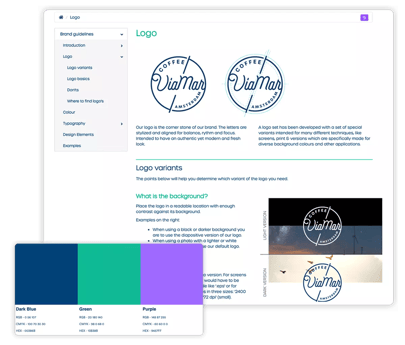 Create comprehensive but accessible brand guidelines that explain not just the "what" of your brand standards, but the "why" and "how." When local teams understand the reasoning behind brand consistency, they become partners in maintaining it rather than viewing guidelines as obstacles.
Invest in onboarding and training for local teams. This doesn't need to be elaborate, short video tutorials, quick-start guides, and FAQ documents can be highly effective. Show them how to navigate your self-service portal, customize templates, and find the assets they need. The more confident they feel using the system, the less likely they are to reach out for help.
Consider creating a "champion" program where you identify enthusiastic users at various locations who can become local resources for their peers. These champions can answer basic questions and share best practices, creating a support network that doesn't rely solely on your central team.
Automate distribution and scheduling
Another significant source of requests comes from local teams asking the central team to distribute or schedule marketing materials on their behalf. You can eliminate much of this work through automation.
Look for platforms that allow local teams to schedule their own social media posts, email campaigns, and digital ads directly from approved templates. Rather than requesting "Can you post this on our Facebook page next Tuesday?", they can schedule it themselves using pre-approved content.
This automation extends to paid advertising as well. Local teams can launch approved ad campaigns in their markets without needing your team to manually set them up. The templates ensure the creative stays on-brand, while automated workflows handle the technical execution.
Some distributed marketing platforms can even automate the ordering and fulfillment of physical marketing materials. Local teams select what they need from your approved catalog, and the system handles printing and shipping directly to their location. No emails, no manual coordination, just automated fulfillment.
Measure and optimize your approach
Once you've implemented these strategies, track the results. Monitor how many requests you're receiving compared to before, which templates are most popular, and where local teams might still be struggling. This data helps you continuously improve your system.
Pay attention to any requests that still come through. These often reveal gaps in your template library or areas where local teams need additional support. If you're getting multiple requests for the same type of material, that's a signal to create a new template for it.
Celebrate the wins with your stakeholders. When you can demonstrate that local activation has increased by 70% while central team workload has decreased, you build support for continuing to invest in these systems. Share success stories of local teams that are effectively using the self-service portal to drive results in their markets.

The path forward
Reducing the volume of marketing requests isn't about saying "no" to local teams, it's about empowering them to say "yes" to themselves. By providing self-service tools, comprehensive templates, clear guidelines, and automated workflows, you create a system where local teams can move quickly while your central team focuses on strategic initiatives rather than tactical execution.
The transformation won't happen overnight, but the investment pays dividends. You'll reclaim time for the creative and strategic work that drew you to marketing in the first place. Your local teams will appreciate the speed and autonomy. And your brand will benefit from both consistency and increased local activation.
Ready to get started? Start by auditing your most common requests, building your first batch of templates, and exploring platforms designed for distributed marketing. Your future self, and your inbox, will thank you.