
Last updated: February 26, 2026
Key Takeaways
If you've ever managed marketing for multiple locations, you know this scenario by heart.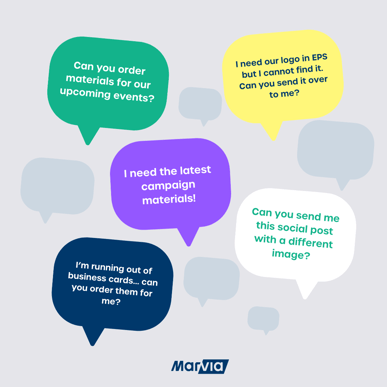 A local manager emails asking to swap out a photo on that flyer template. Another location needs to update its hours on social media graphics. Then someone else has "just a quick change" to their store signage. Before lunch, your inbox is flooded with dozens of these requests, each one supposedly urgent.
Your strategic projects? Still sitting in your to-do list, untouched.
This flood of customization requests doesn't just eat up your time; it creates bottlenecks that slow down local marketing and lead to missed opportunities. The real question isn't whether local teams need to make edits. It's how they can do it without turning you into a 24/7 customization service.
The real challenge: control vs. autonomy
Here's the tension every distributed marketing team faces: your brand consistency is non-negotiable. It's what builds trust and recognition across all locations. But local teams need flexibility to speak to their specific audiences, showcase community involvement, and jump on local opportunities fast.
.jpg?width=338&height=338&name=brand%20consistency%20issues%20(1).jpg) Give them too much control, and they either stop marketing altogether or go rogue with off-brand materials they create themselves. Give them too much freedom, and you get "creative drift", that slow erosion of brand standards that leaves customers confused.
Give them too much control, and they either stop marketing altogether or go rogue with off-brand materials they create themselves. Give them too much freedom, and you get "creative drift", that slow erosion of brand standards that leaves customers confused.
I've seen this play out everywhere. The franchise owner launched their own social media campaign with the wrong logo because waiting three days for approval wasn't an option. The regional manager hired a local designer because the central team was too backlogged.
These aren't acts of rebellion. They're symptoms of a broken system.
Smart templates: your secret weapon
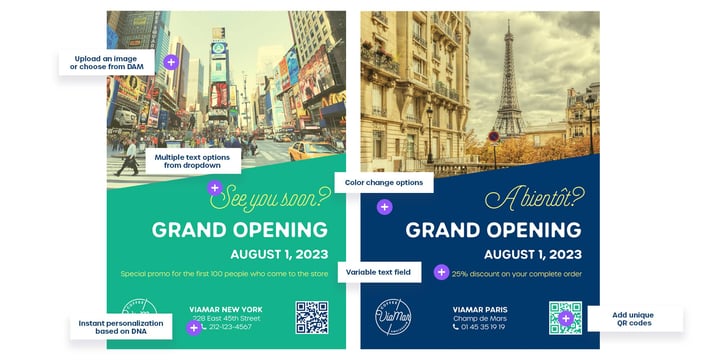
The best solution? Smart, customizable templates that give local teams editing power within guardrails. Think of them as marketing paint-by-numbers; the structure and brand elements are locked, but local teams can personalize specific areas.
What makes a template "smart"?
It clearly separates what's locked from what's editable. Your logo, brand colors, fonts, and core messaging stay protected. Meanwhile, location info, local images, staff names, event details, and promotions can be customized.
Smart templates also include built-in validation. Character limits keep headlines from breaking your design. Color pickers only show brand-approved options. Image requirements maintain quality standards. When someone tries uploading a blurry photo or typing text that's too long, the system flags it immediately before it becomes your problem.
Creating a self-service ecosystem
Templates alone won't cut it. You need an ecosystem that lets local teams help themselves.
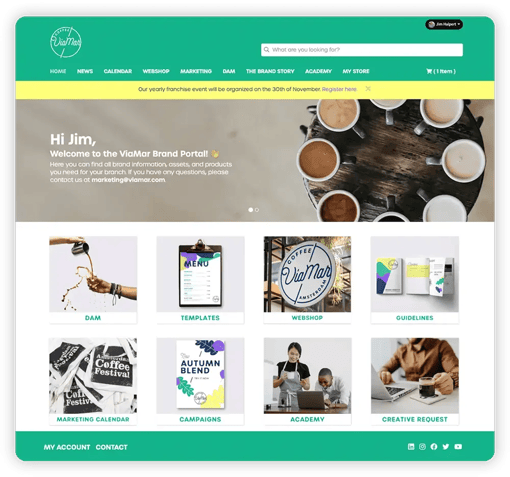
Start with a centralized brand hub where all approved assets, templates, and guidelines live. No more digging through 2019 email attachments for the right logo file.
But don't just dump files there. Include practical guidelines that explain not just what to do, but why it matters. Instead of "always use Pantone 2945C," try "this blue conveys trust and professionalism, which is core to our brand." Context helps people make better decisions in situations you haven't explicitly covered.
Training matters too. When you roll out new templates or systems, show local teams how to use them. Record quick tutorial videos. Create an FAQ. Host office hours for questions. This upfront investment saves you from explaining the same things repeatedly.
Establishing smart approval workflows
Not every edit needs your eyes on it. The trick is matching oversight to risk.
Simple customizations, like changing contact info or swapping local staff photos, should happen instantly without review. More substantial changes might trigger an automated brand check. Only high-risk content, like major campaigns or sensitive messaging, should need human approval from central marketing.
This approach keeps you focused on strategy instead of rubber-stamping routine edits. It also builds trust with local teams who appreciate the autonomy to move quickly. When everything requires approval, people find workarounds. When you trust them within boundaries, they respect those boundaries.
Modern platforms can automate much of this, routing content for approval only when needed and giving clear feedback when something needs adjustment. No more "did you get my request?" email chains.
The role of technology in scaling local marketing
Let's be real: you can't solve this with spreadsheets and good intentions. As you grow, you need technology that scales with you.
A distributed marketing platform connects brand guidelines, templates, customization tools, approval workflows, and performance tracking in one place. Central marketing maintains oversight without micromanaging. You can see which locations are using materials, what customizations they're making, and how those materials perform.
The right platform also integrates with your existing tools, social media schedulers, email platforms, print vendors. Local teams create, customize, and deploy materials without juggling logins or learning complicated systems.
Measuring success and iterating
How do you know it's working?
Track customization requests hitting central marketing. If you've successfully enabled self-service, you should see a significant drop, freeing up time for strategic work.
Monitor local marketing activation. Are more locations using materials now that they can customize easily? Are they doing it more often? Higher rates mean your system is working.
Run periodic audits of locally-customized materials. Are teams staying within brand guidelines? Where you spot issues, use them to improve templates, tighten guardrails, or provide more training.
And talk to local teams directly. What's working? What's frustrating? What would help them be more effective? These conversations keep you improving instead of assuming your initial setup was perfect.
Moving forward together
Empowering local teams doesn't mean sacrificing brand control. It means being smarter about where you focus your energy.
The shift from bottleneck to enabler isn't just good for morale, it's good for business. Local teams respond quickly to opportunities. Customers see relevant, timely messages. Your brand maintains consistency that builds trust.
What could you change this week? Maybe audit your most-requested templates to identify what could be safely customizable. Or talk to a few local managers about what would make their lives easier.
Small steps toward empowering local teams create significant results, for everyone.